Call Anytime
+91 80878 67383AGRIVENTURE TOLPRIDE (Tolfenpyrad 15% EC) Insecticide
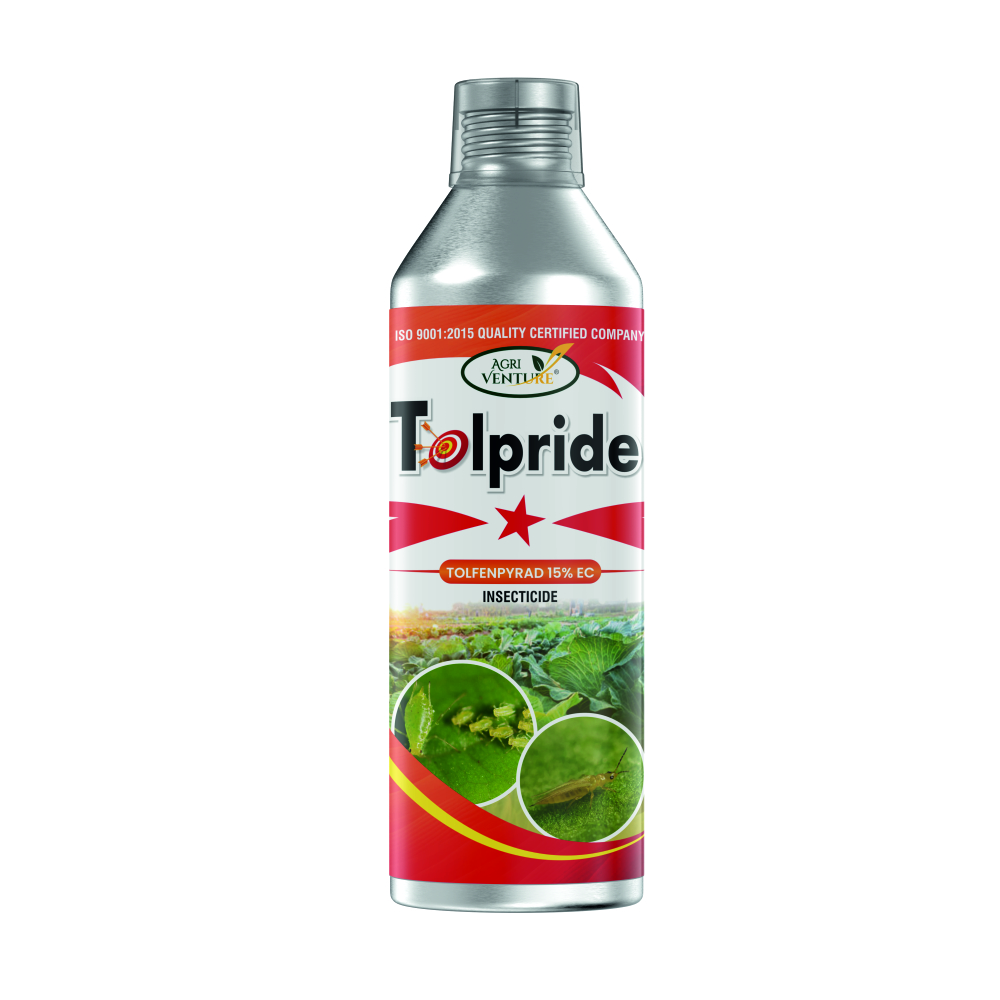
AGRIVENTURE TOLPRIDE (Tolfenpyrad 15% EC) Insecticide
Description:
AGRIVENTURE TOLPRIDE is a broad-spectrum, contact insecticide and acaricide (miticide) used to control hard-to-kill sucking and chewing pests in various crops, such as chili, cotton, and vegetables. It works by disrupting energy metabolism (mitochondrial electron transport) in insects, providing rapid knockdown and residual control.
Technical content: Tolfenpyrad 15% EC
Key Features & Benefits:
- Broad-Spectrum Control: Highly effective against a wide variety of sucking pests (thrips, aphids, jassids, whiteflies, mites) and chewing/biting pests (Diamondback Moth/DBM).
- Fast Knockdown & Anti-Feedant: Stops pests from feeding on crops immediately upon contact, which helps significantly reduce the transmission of plant viruses.
- Multiple Life Stage Activity: Features ovicidal action, meaning it kills pest eggs, disrupting the lifecycle of rapidly reproducing insects.
- Translaminar Action: The chemical can pass through the leaf surface, allowing it to reach and eliminate pests that hide underneath the foliage.
- Dual Protection: Acts as an insecticide while also providing preventative fungicidal properties that suppress diseases like powdery mildew and anthracnose.
Crops suitability:
- Vegetables: Cabbage (Diamondback Moth), Okra, Chili, Onion, and Brinjal.
- Field & Cash Crops: Cotton, Cumin, Paddy (Rice), and Tea.
- Fruits & Plantations: Mango, Citrus, Grapes, and Pomegranate
Commonly used for (Insect / Diseases):
- Sucking Pests: Thrips, Aphids, Jassids, Whiteflies, and Mites.
- Chewing/Biting Pests: Diamondback Moth (DBM) in cabbage, Leaf miners, and Tobacco caterpillars.
Mode of entry: Contact
Mode of action:
1. Core Mechanisms
- Cellular Respiration Block: It acts on the mitochondria (the "power plants") of the pest's cells. Specifically, it inhibits Complex I of the respiratory electron transport chain.
- Energy Depletion: By blocking electron transport, it shuts down the production of Adenosine Triphosphate (ATP). Without energy, the insect cannot move or feed, resulting in an immediate knockdown effect.
2. How It Acts on Pests
- Contact & Stomach Action: It is absorbed through direct contact with the pest or via ingestion when the insect feeds on treated foliage.
- Anti-feeding Effect: Pests stop feeding almost immediately upon coming into contact with the chemical, preventing further crop damage even before death occurs.
- Life-Stage Control: It targets all primary life stages, including eggs (ovicidal), nymphs, larvae, and adults. It also has an effect on female egg-laying, suppressing reproduction.
Mode of application: Foliar spray
Dose: 2.25ml-2.5ml per 1 liter water or 35ml in 15-liter water
Additional information:
- Resistance Management: Because of its unique mode of action, it is an excellent rotation choice for managing pests that have built up resistance to older organophosphate or pyrethroid insecticides.
- Ecotoxicity: The chemical is highly toxic to honeybees and aquatic life. Avoid application during periods of active bee foraging and keep runoff away from aquaculture or waterways.
Available Sizes
250ML
500ML
Dose
35ml in 15-liter water
Buy Now

×
![]()