

Call Anytime
+91 80878 67383AGRIVENTURE SHRUSHTI (Bacillus Thuringiensis – BT) – Bio-larvicides
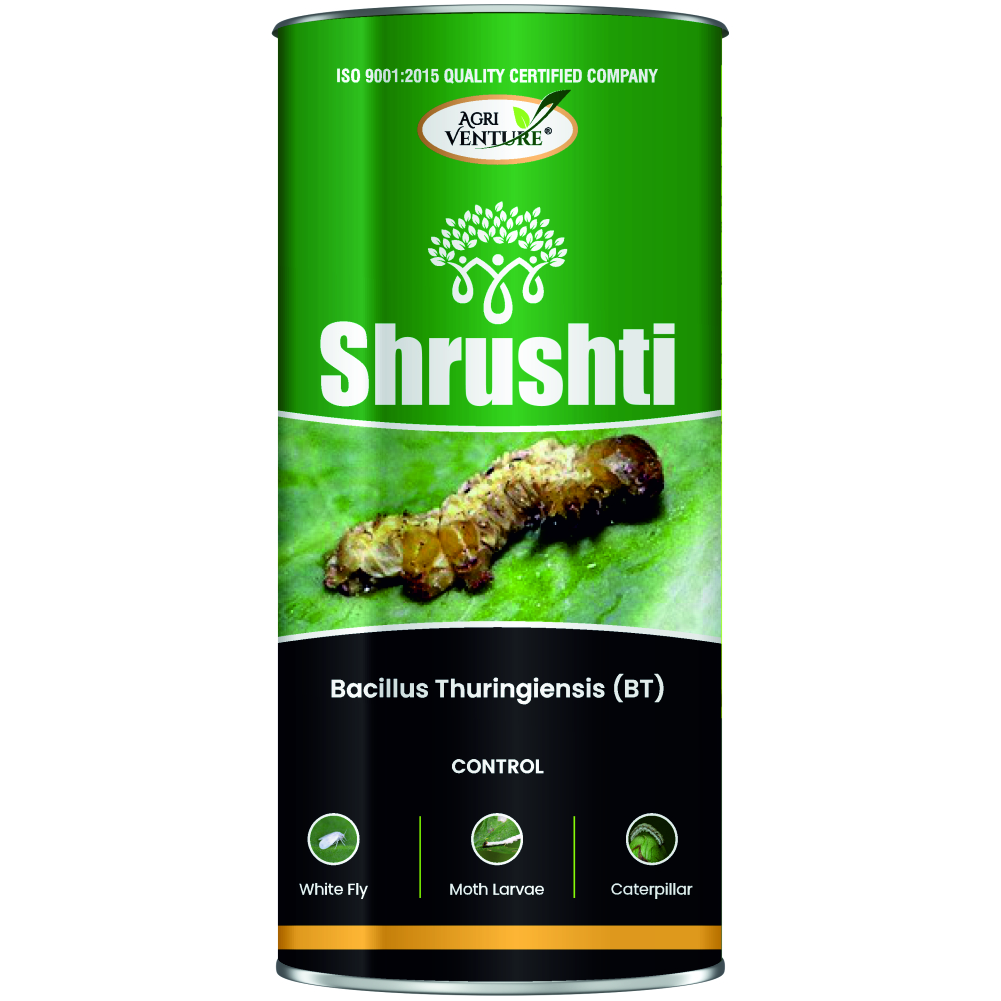
AGRIVENTURE SHRUSHTI (Bacillus Thuringiensis – BT) – Bio-larvicides
Description:
AGRIVENTURE SHRUSHTI is a naturally occurring soil bacterium primarily used as a highly specific biological pesticide in agriculture, forestry, and public health. It is favored because it targets specific pest larvae upon ingestion while remaining harmless to humans, pets, birds, and beneficial insects.
Technical content: Bacillus Thuringiensis – BT
Key Features & Benefits:
- Highly Specific Targeting: BT produces crystal proteins that only activate in the alkaline digestive systems of specific insect larvae (like caterpillars and beetles). Different BT strains target different pest families without affecting unrelated insects.
- Lower Chemical Dependency and Residue: BT can be applied as a foliar spray right up to the day of harvest as it leaves negligible toxic residue on crops. This aligns perfectly with sustainable farming and organic agriculture standards.
- Transgenic Plant Integration (BT Crops): Strains of BT DNA are routinely inserted into crops like corn, cotton, and potatoes, allowing the plants to naturally synthesize their own pest-deterring proteins. This significantly lowers crop damage, decreases the need for pesticide spraying, and boosts yields.
- Resistance Management: By alternating different BT strains in foliar sprays, farmers can effectively combat pest populations that have developed resistance to traditional chemical insecticides.
Crops suitability:
1. Sprayable Microbial Biopesticides
BT spores and crystal proteins are widely sprayed on almost any crop facing caterpillar (Lepidoptera) or beetle (Coleoptera) infestations.
- Vegetables: Brassicas (cabbage, broccoli), tomatoes (fruit borers), potatoes, and eggplants.
- Fruits & Orchards: Apples, peaches, and berries.
- Grains & Row Crops: Soybeans and corn.
2. Transgenic (GM) Crops
BT genes can be integrated directly into a plant’s DNA so the crop produces its own BT proteins. Suitability is dictated by commercial regulations and agricultural needs:
- Primary Crops: Corn and cotton are the most common.
- Other Crops: Regional varieties have been developed for soybeans, rice, and potatoes.
Commonly used for (Insect / Diseases):
|
Bt Strain |
Primary Target Insects |
Common Crop / Habitat Applications |
|
Bt kurstaki (Btk) |
Caterpillars (Lepidoptera), including tomato hornworms, cabbage loopers, and armyworms. |
Vegetables, fruits, shade trees, and ornamental plants. |
|
Bt israelensis (Bti) |
Mosquito, black fly, and fungus gnat larvae. |
Standing water, ponds, soil, and aquatic environments. |
|
Bt tenebrionis (Btt) |
Beetles (Coleoptera), such as the Colorado potato beetle. |
Potato, eggplant, and various ornamental crops. |
|
Bt aizawai (Bta) |
Caterpillars, specifically diamondback moths and various leafrollers. |
Vineyards, vegetables, and field crops. |
Mode of entry:
AGRIVENTURE SHRUSHTI (Bacillus thuringiensis (BT)) works exclusively via ingestion. The insect larva must actively consume the bacterial spores or crystal proteins (Cry/Cyt toxins); it is not a contact or systemic poison that absorbs through the skin.
Mode of action:
- Ingestion: Target larvae consume the BT spores and inactive crystal proteins (endotoxins) found on plant surfaces or in transgenic crops.
- Solubilization: The crystal proteins are water-soluble. They dissolve in the highly alkaline, high-pH environment (pH 9.0 - 10.5) of the insect's midgut.
- Activation: Gut enzymes (proteases) break down the inactive crystals into active, toxic protein fragments.
- Binding: The active toxins traverse the gut lining and bind to specific receptors on the epithelial (midgut) cells. (This provides target specificity, as only certain insects have the exact receptors needed to bind with specific BT strains).
- Pore Formation: The bound toxins change shape, insert into the cell membrane, and form structural pores.
- Cell Lysis & Death: The pores disrupt the gut's osmotic balance, causing the epithelial cells to swell and burst. The insect immediately stops feeding, suffers paralysis of the digestive system, and ultimately dies from starvation or septicemia.
Mode of application: Foliar spray
Dose: 1 kg in 1 acre
Available Sizes
1 KG
Dose
1 kg in 1 acre
Buy Now

×
![]()