

Call Anytime
+91 80878 67383AGRIVENTURE SANKAT SATHI (Entomopathogenic Nematodes – EPN) – Bio- Nematicides
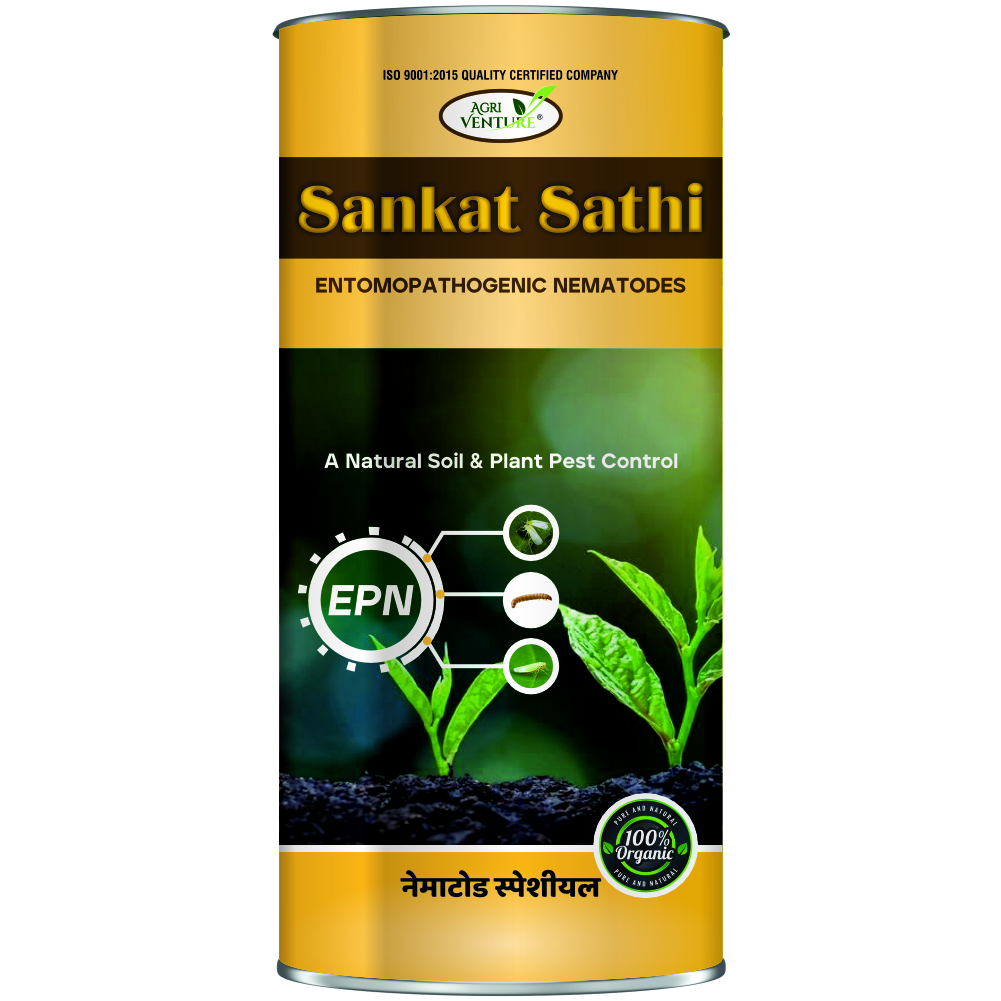

AGRIVENTURE SANKAT SATHI (Entomopathogenic Nematodes – EPN) – Bio- Nematicides
Description:
AGRIVENTURE SANKAT SATHI (EPNs) are microscopic, soil-dwelling roundworms that parasitize and kill insects. Derived from the Greek words entomo (insect) and pathogenic (disease-causing), they are highly valued in agriculture as eco-friendly biological control agents.
Technical content: Entomopathogenic Nematodes – EPN
Key Features & Benefits:
- Highly Effective Pest Control: They target a wide range of soil-dwelling and hidden pests (e.g., grubs, weevils, caterpillars, thrips, and fungus gnats), often killing the host within 24 to 48 hours.
- Active Hunting: Unlike conventional sprays, EPNs actively hunt and penetrate pests, reaching insects deep in the soil, inside stems, or under foliage.
- Eco-Friendly & Safe: They are completely safe for humans, pets, plants, and beneficial organisms like earthworms, leaving zero harmful residues on crops.
- No Pest Resistance: Because EPNs rely on a dynamic biological attack, pests cannot develop immunity to them.
- IPM Friendly: They are highly compatible with most chemical pesticides and are an excellent addition to sustainable and organic farming programs.
Crops suitability:
Highly Suitable:
- Vegetables & Tubers: Tomatoes, potatoes, sweet potatoes, cabbage, and carrots (targets: white grubs, cutworms, wireworms, and root weevils).
- Orchards & Fruits: Citrus, apples, and bananas (targets: citrus root weevils, clearwing borers, and codling moths).
- Cash Crops: Sugarcane (targets: root grubs and early shoot borers).
- Turf & Nursery: Golf courses, lawns, and potted plants (targets: fungus gnats and white grubs).
Not Suitable:
- Above-Ground/Foliar Pests (without protectants): Open, sun-drenched row crops. EPNs are killed by UV radiation and require high relative humidity to survive on leaves.
Commonly used for (Insect / Diseases):
Target Insects (Pests):
EPNs typically target the larval, pupal, or adult stages of various destructive insects, specifically:
- Grubs & Beetles: White grubs (scarab beetle larvae), wireworms, black vine weevil, Diaprepes root weevil.
- Caterpillars: Cutworms, armyworms (including fall armyworm), webworms, codling moth larvae.
- Root Pests: Corn rootworm, root maggots, strawberry root weevil.
- Fungus & Flies: Fungus gnats (sciarid flies) and shore flies in greenhouses or mushroom production.
- Turf Pests: Mole crickets, billbugs.
Target Damages & Diseases (Vectors):
EPNs don't treat plant pathogens directly; they combat the insect vectors that transmit plant diseases or cause structural and root damage:
- Root rots and wilting: Caused by the tunneling and feeding of soil-dwelling larvae (e.g., grubs) that open wounds in root systems.
- Stunted growth & plant death: Mitigated by removing sap-sucking or root-chewing pests.
Mode of entry: Via natural body openings or directly penetrates the insect’s cuticle to reach the hemocoel. The most common method of entry is through the insect's natural anatomical apertures. EPNs enter via the:
- Mouth
- Anus
- Spiracles
Mode of action:
1. Host Seeking and Penetration
- Finding the host: EPNs move through the soil and locate insects by sensing chemical cues (such as carbon dioxide and ammonia) and vibrations.
- Entry: The infective juveniles (the only free-living stage) enter the insect’s body cavity (hemocoel) through natural openings (mouth, anus, and spiracles). In the case of Heterorhabditis species, they can also actively abrade and penetrate the insect's soft cuticle directly.
2. Symbiotic Bacteria Release
- Once inside the host, the nematodes release mutualistic bacteria from their gut into the insect's blood.
- Steinernema nematodes carry Xenorhabdus bacteria, while Heterorhabditis nematodes carry Photorhabdus bacteria.
3. Septicemia and Host Death
- The symbiotic bacteria proliferate and release specific toxins and enzymes that dismantle the host's immune system.
- This causes rapid bacterial septicemia, resulting in the death of the insect host within 24 to 48 hours.
4. Digestion and Development
- The bacteria digest the insect's internal tissues, converting them into a nutrient-rich "soup".
- The nematodes feed on this liquefied mixture, mature into adults, and undergo mating.
5. Reproduction and Emergence
- The nematodes reproduce for multiple generations inside the dead insect (cadaver).
- As nutrients deplete and the cadaver breaks down, the next generation of infective juveniles emerges into the soil to seek out new insect hosts.
Mode of application: Soil drenching, Pressurized spraying, or Targeted injection
Dose: 1 kg in 1 acre
Additional information:
AGRIVENTURE SANKAT SATHI are applied to the soil or foliage in their "infective juvenile" stage. They enter the insect through natural body openings and release symbiotic bacteria. These bacteria multiply rapidly, killing the pest through blood poisoning, and break down the insect's tissue into a nutritious food source for the nematodes to reproduce.
Available Sizes
1 KG
Dose
1 kg in 1 acre
Buy Now

×
![]()