

Call Anytime
+91 80878 67383AGRIVENTURE KHETI AMRUT (NPK Consortia) - Bacterial Product
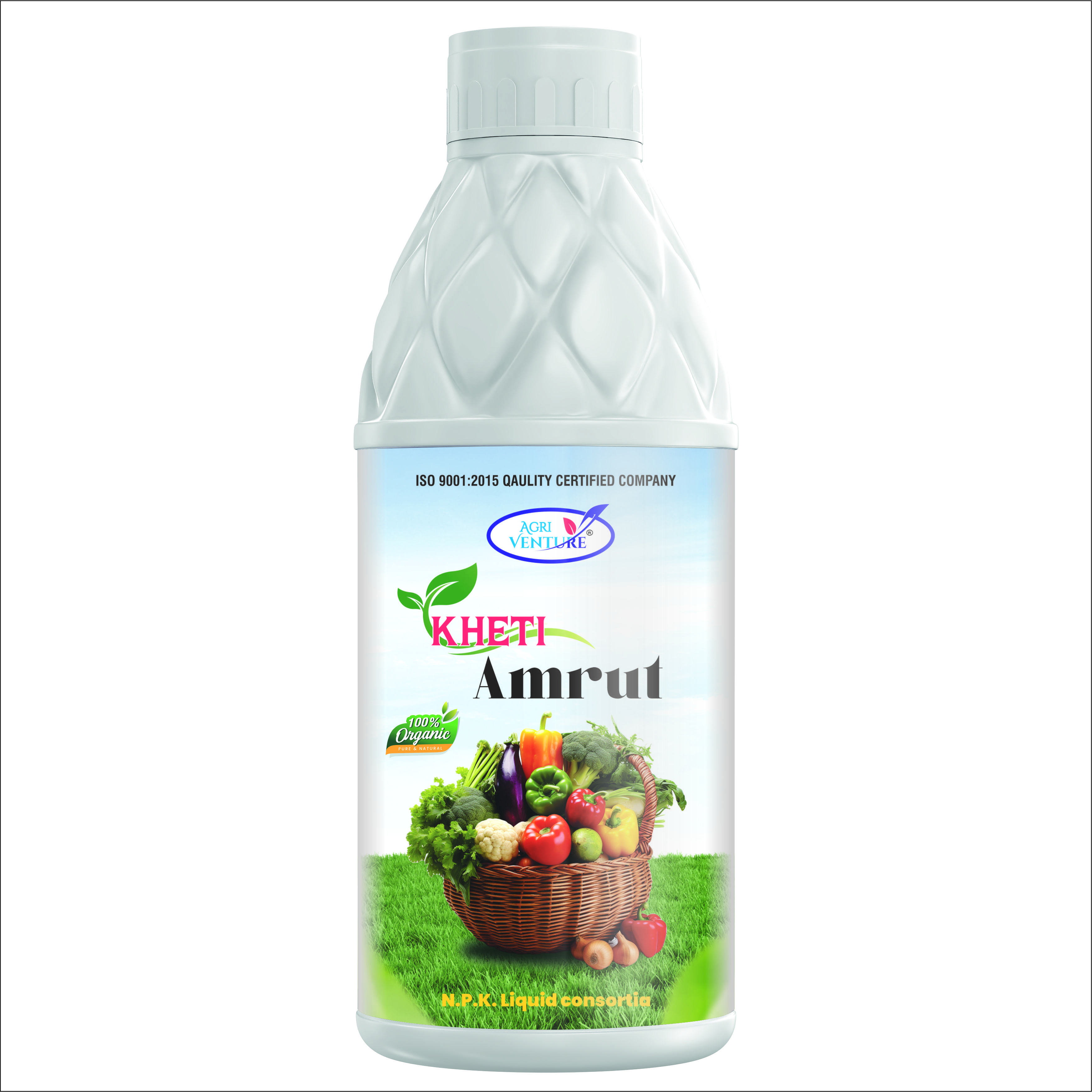

AGRIVENTURE KHETI AMRUT (NPK Consortia) - Bacterial Product
Description:
AGRIVENTURE KHETI AMRUT is a synergistic blend of beneficial soil microorganisms that fix atmospheric Nitrogen, solubilize insoluble Phosphorus, and mobilize Potassium in the soil. Instead of chemical salts, this living bio-fertilizer restores microbial balance, naturally boosting crop yields by 20% to 30% while reducing reliance on synthetic inputs.
Technical content: NPK Consortia (Nitrogen, Phosphorus and Potassium)
Key Features & Benefits:
- Biological Nitrogen Fixation: Converts inert atmospheric nitrogen into plant-absorbable ammonium, reducing the need for synthetic fertilizers like urea.
- Phosphorus Solubilization: Secretes organic acids that break down and dissolve "fixed" or insoluble phosphorus locked in the soil, making it readily available for root uptake.
- Potassium Mobilization: Utilizes specific microbes (like Frateuria aurantia) to break down soil minerals, releasing soluble potassium necessary for water regulation and enzyme activation.
- Growth Promotion: Microbes synthesize natural growth regulators (vitamins, auxins, gibberellins) that enhance seed germination and encourage robust root development.
- Improved Soil Structure: Boosts overall microbial activity, which enhances soil aeration, organic matter breakdown, and moisture retention.
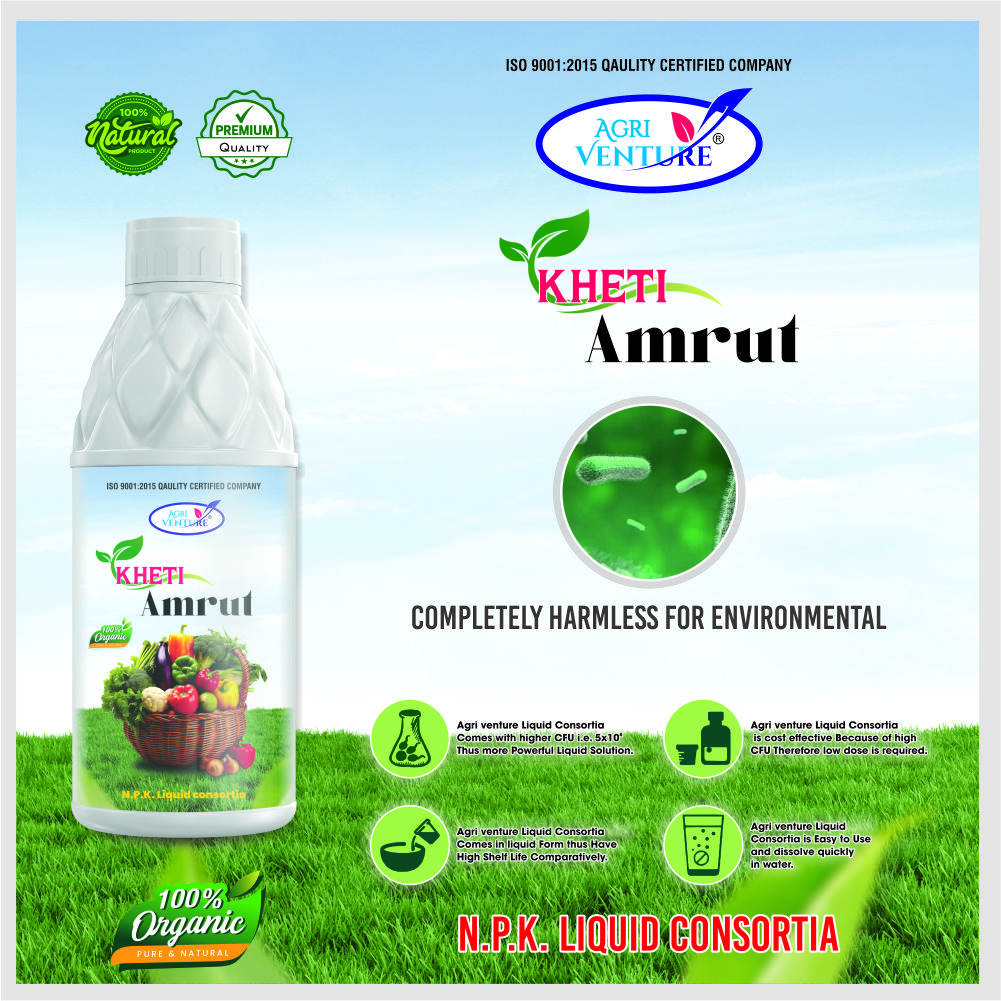
- Cost-Effective & Eco-Friendly: Promotes sustainable agriculture by decreasing reliance on expensive chemical inputs and minimizing environmental runoff.
Crops suitability:
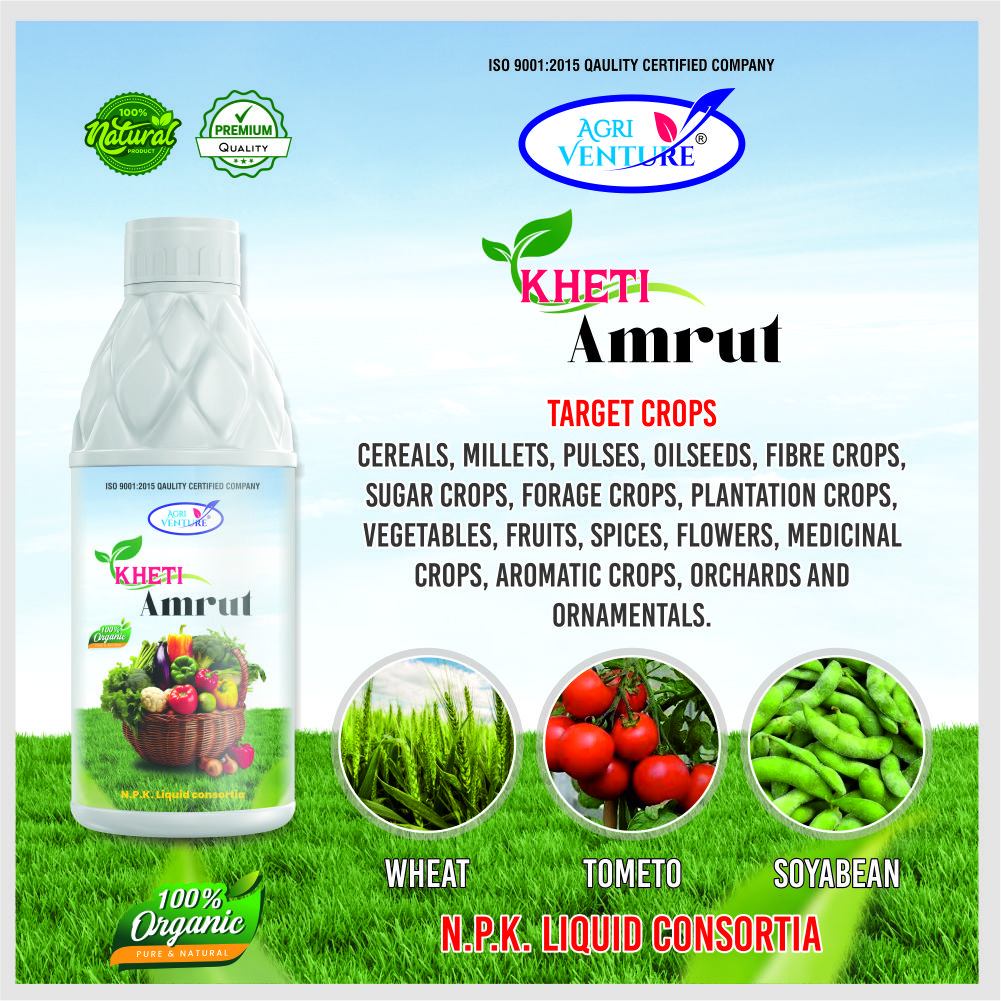
- Cereals & Millets: Rice, wheat, maize, barley, and sorghum.
- Vegetables: Tomatoes, potatoes, onions, chilies, cabbage, and leafy greens.
- Fruits: Mango, grapes, bananas, citrus, and pomegranates.
- Pulses & Oilseeds: Soybeans, lentils, chickpeas (gram), groundnuts, and mustard.
- Cash Crops: Sugarcane, cotton, and tea.
Commonly used for (Insect / Diseases):
- Soil-Borne Fungal Diseases: Helps suppress root rot, wilt, and damping-off (e.g., Fusarium or Pythium species) by establishing beneficial microbial dominance in the root zone (rhizosphere).
- Nutrient Deficiency Diseases: Corrects yellowing and weak stems by continuously releasing locked Nitrogen, Phosphorus, and Potassium.
- Environmental Stress: Strengthens cell walls against drought and extreme temperatures.
Mode of entry: Rather than a systemic entry into the plant, the consortium colonizes the soil.
Mode of action:
- Nitrogen-Fixing Bacteria (e.g., Azotobacter, Azospirillum, Rhizobium): These bacteria absorb inert nitrogen from the atmosphere and fix it biologically into usable ammonium \(\text{(NH}_{4}^{+}\text{)}\) for the plants.
- Phosphate-Solubilizing Bacteria (PSB - e.g., Bacillus, Pseudomonas): They secrete organic acids (like gluconic and citric acids) to lower the soil pH, dissolving "locked," insoluble phosphorus into accessible, inorganic phosphate \(\text{(H}_{2}\text{PO}_{4}^{-}\text{)}\).
- Potassium-Mobilizing Bacteria (KSB - e.g., Frateuria aurantia): These microbes break down silicate minerals and insoluble potassium salts, converting them into soluble forms that plant roots can easily absorb.
Mode of application: Seed Treatment, Soil Drenching / Application, Drip Irrigation
Dose : 1 liter in 1 acre
Available Sizes
1 LTR
Dose
1 liter in 1 acre
Buy Now



×
![]()