Call Anytime
+91 80878 67383AGRIVENTURE COPPER - Chelated Micronutrient Fertilizer
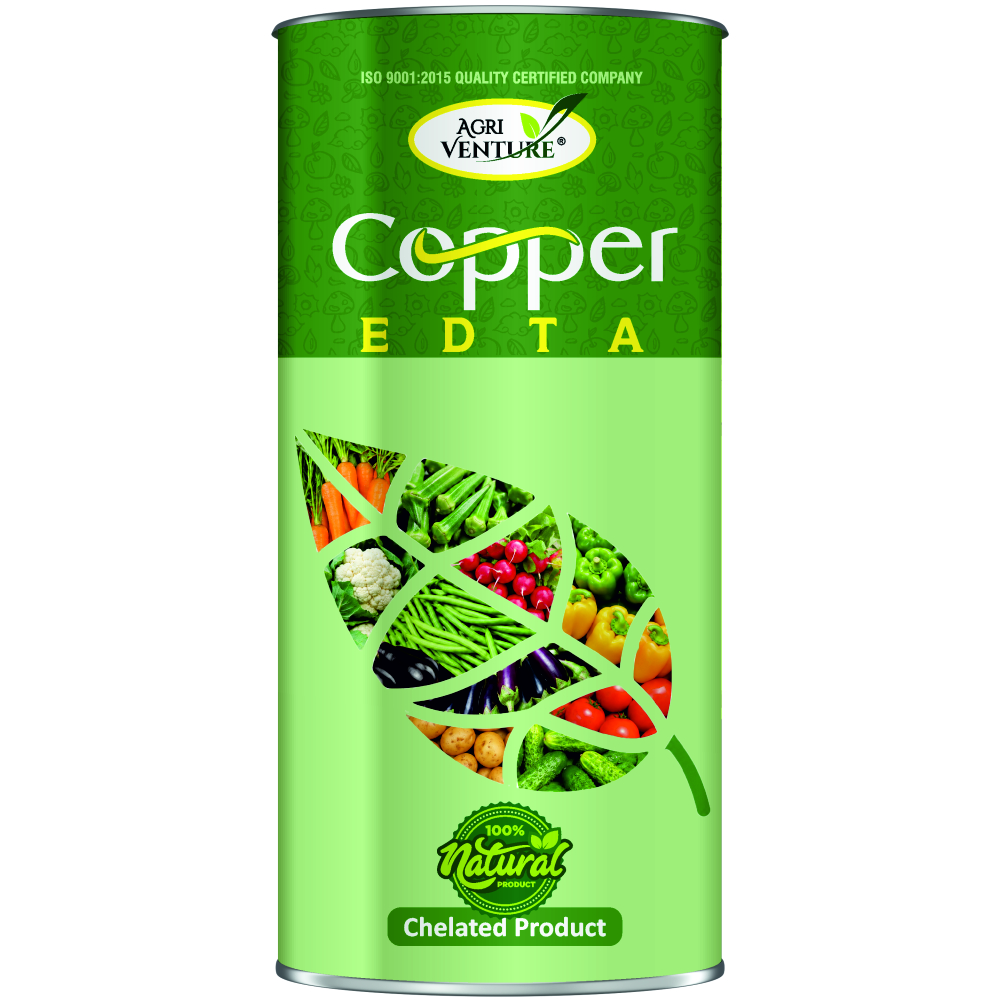

AGRIVENTURE COPPER - Chelated Micronutrient Fertilizer
Description:
AGRIVENTURE COPPER EDTA (Ethylenediaminetetraacetic Acid) is a chelated micronutrient used primarily in agriculture. It binds copper ions to prevent them from reacting with other elements in soil, making the metal highly bioavailable and readily absorbed by plants through their roots and foliage.
Technical content: Copper EDTA
Key Features & Benefits:
- Deficiency Correction: Prevents copper deficiency, which causes stunted growth, discolored leaves, and poor fruit yield.
- Plant Metabolism: Essential for chlorophyll formation, photosynthesis, respiration, and protein synthesis.
- Disease Resistance: Strengthens plant cell walls and enhances natural defense mechanisms against fungal spores.
- Quality Enhancement: Intensifies flavor and coloration in vegetables and flowers.
Crops suitability:
AGRIVENTURE COPPER EDTA is universally beneficial for a wide spectrum of agricultural and horticultural crops.
- High Copper Demand Crops: Highly responsive crops that demand more copper include cereals (wheat, rice, corn), vegetables (tomatoes, spinach, beans, onions, lettuce), and fruits (citrus, apples, grapes).
- General Broad-Spectrum: It is also broadly suitable for soybeans, cotton, sunflowers, and ornamental flowers.
Commonly used for:
AGRIVENTURE CHELATED COPPER (often sold as Copper 12% EDTA) is a highly soluble micronutrient fertilizer used to prevent or correct copper deficiencies in crops. It is commonly used to support photosynthesis, activate essential plant enzymes, and strengthen disease resistance.
Mode of entry: Foliar Absorption & Root Absorption
Mode of action:
Copper EDTA uses a "chelation" process (where EDTA acts as a protective carrier) to deliver copper directly to the plant cells. Once inside, its mode of action unfolds in four primary ways:
- Enzyme Activation: It acts as a vital cofactor for numerous metabolic and defense enzymes (e.g., ascorbic acid oxidase and cytochrome oxidase), which regulate plant growth and development.
- Photosynthesis & Chlorophyll: Copper is essential for chloroplast formation and electron transport during photosynthesis, directly improving green, healthy leaf development and preventing chlorosis.
- Protein & Carbohydrate Metabolism: It facilitates nitrogen fixation and the metabolism of carbohydrates, boosting overall dry matter accumulation.
- Structural Integrity & Disease Resistance: Copper is heavily involved in the strengthening of cell walls. It also stimulates the production of phytoalexins (defense compounds), helping the plant naturally ward off fungal and bacterial pathogens.
Mode of application: Foliar Spray, Fertigation / Drip Irrigation, Soil Drench / Root Application
Dose: 1.5 - 1.7 gm per 1 liter water or 25gm in 15-liter water
Additional information:
It is highly recommended for soils susceptible to nutrient lock-out, such as:
- Alkaline Soils: High pH causes native copper to become insoluble.
- Sandy/Leached Soils: Naturally low in copper.
- High Organic Matter Soils: Binds free copper, making it unavailable to roots.
Toxicity Warning: Copper EDTA is highly persistent in the environment. Care should be taken not to over-apply, as excessive amounts can lead to bioavailability spikes causing phytotoxicity (metal toxicity) in plants.
Available Sizes
500GM
Dose
25gm in 15-liter water
Buy Now

×
![]()